11 July 2013
STEM Engineering Kit Set-Up
I am really trying to be organized this year! As the STEM Coordinator for my building, the biggest thing teachers say they need to be successful are STEM resources. I am working on creating kits for each of my STEM Engineering Challenges for the teachers to use throughout the school year. I am using really sturdy cardboard boxes from Staples as well as plastic tubs (depending on the amount and size of the materials needed for each challenge).
Here is an example of a STEM Engineering Challenge Kit. I used the title slide (laminated) as the label since it has the question on it.

I tried to put each individual item into a ziploc bag in order to keep the kit more organized. I am going to ask teachers to place a post-it on the outside of the box if there are supplies that are needed (mainly the disposable items).

I used pocket envelope folders from Staples for the lab sheets. I copied the lab sheets onto white cardstock paper, so hopefully they are more durable! I glued this page onto the front of the folder and placed the rest of the lab sheets inside the folder.


Here is an example of a STEM Engineering Challenge Kit. I used the title slide (laminated) as the label since it has the question on it.

I tried to put each individual item into a ziploc bag in order to keep the kit more organized. I am going to ask teachers to place a post-it on the outside of the box if there are supplies that are needed (mainly the disposable items).

I used pocket envelope folders from Staples for the lab sheets. I copied the lab sheets onto white cardstock paper, so hopefully they are more durable! I glued this page onto the front of the folder and placed the rest of the lab sheets inside the folder.


I really hope the kits will be used this year in a lot of classrooms! We will be doing some of the challenges during the first 10-15 minutes of our monthly staff meetings, which I hope will get teachers excited about trying the activities with their students!

This picture is of another engineering challenge that fit into a plastic tub. The envelope folder is inside the tub!
Hope this helps you stay organized! I will be having a GIVEAWAY for one of these Engineering Challenge kits during the month of August! Stay tuned!
10 July 2013
Build Your Own Robot Template
As I was browsing on Pinterest this evening, I came across this really cool idea! You can check out the blog post by clicking here! Now this freebie is for personal use only, but I think there are a bunch of ways for teachers to use it in their classrooms! Click the picture of the robot parts and it will take you to the FREE download!

I think I am going to print them off for my student table groups and have them create dichotomous keys! How cool is that??? She suggested printing the template off onto magnetic sheets! You can find these magnetic paper sheets by clicking here. I have already got them in my Amazon cart! I can't wait for school to start! :)
I think I am going to print them off for my student table groups and have them create dichotomous keys! How cool is that??? She suggested printing the template off onto magnetic sheets! You can find these magnetic paper sheets by clicking here. I have already got them in my Amazon cart! I can't wait for school to start! :)
09 July 2013
STEM Challenges ~ FREE Student Role Sheets!!!
We complete a STEM Engineering Challenge once a week in our classroom! I compile all of the materials I need for the challenges into plastic tubs along with the lab sheets. For each STEM Engineering Challenge that is not individual, the members of the team need to have specific roles. These are the sheets I use for these roles. I post them in the classroom after I print them on colored paper and laminate them, of course! I also make smaller card versions to use with each table (these are also laminated and printed on colored paper). I use the cards both when students randomly choose their roles and when I assign the roles. Having the card with the role expectations with them during the challenge solves a lot of the issues that occur during a STEM challenge! Click here for the link to this freebie!

I hope you can use this freebie in your classroom!
I hope you can use this freebie in your classroom!
24 June 2013
What STEM is... and What STEM isn't...
Our school began our journey with STEM this past school year, and it has really been one! We are nowhere near where we strive to be, but we are making forward progress every day (which is a great thing)! Our district has some support from some outside organizations in developing our STEM program, but they really want us to "find our own way", which can be a little frustrating (OK, maybe a lot frustrating). We began our STEM process with the understanding of the acronym itself...
S = Science (of course most elementary teachers do not feel comfortable teaching science)
T = Technology (what technology? we are lucky to have four desktops in our rooms)
E = Engineering (what does that even mean?)
M = Math (phew! finally one we know)
I am not kidding when I say this is really where we were in the process! Most of the staff figured that if we just did one science lab a week, we were covered, right? Right? So that is just what we did. We taught the same ways we had always taught and just sprinkled a little science in where we could fit it. But, this is not STEM! We met in cross grade level teams and planned science stuff, we tried to talk about science, and we got more non-fiction books for the classrooms (because as teachers books can just about fix everything).
Then, we went to a STEM professional development day. Uh oh! We were not on the right track at all! Time to back that STEM train up and start over!
STEM is...
STEM is a philosophy of teaching that encourages and supports creativity and innovation in K-12 students.
STEM schools should provide challenging, student-centered, inquiry-based experiences for students. Students should integrate skills from different subject areas in order to solve real world problems.
STEM education is designed to prepare students as responsible citizens for success in the real world, college, and work experiences.
No matter what the career path, STEM teaches students how to problem solve, think creatively, collaborate with others to come up with solutions, and communicate with one another.
STEM education is a direct response to the knowledge that our future needs to be built on technological leadership, innovative thinking, and critical problem solving.
STEM schools better prepare their students for their role in a global environment where they will be better equipped to compete for jobs, ideas, etc.
STEM education is the key to our future!
A STEM education unleashes the potential and creativity of our students as well as giving them the skills they need in order to develop revolutionary ways of thinking and problem solving about the world.
STEM is not...
STEM is not only for students who are academically advanced.
ALL students deserve and will benefit from a STEM based education. In fact, students who are not successful in a traditional school setting will find success in a STEM program!
STEM is not only for those students and teachers interested in math, science, engineering and technology.
STEM helps all students develop and apply an essential set of skills through a diverse and rigorous curriculum. These skills can be used in all job fields, not just those specific to science, technology, math, and engineering fields.
STEM is not only for schools rated in the highest categories in their state.
In this age of standardized testing, students in STEM schools will perform better because of the critical thinking skills developed within the STEM program. Just because a school does not have high (or even passing) state test scores does not mean it cannot benefit tremendously from a STEM program.
STEM is not "one size fits all".
Each school must develop its own STEM program in order to fit the needs of its students. It is a highly personalized form of education.

Now that we are planning for year two of our STEM implementation, we feel we have a better handle on STEM. We use backmaps to plan our STEM lessons. These are a great way to organize your thinking as you develop STEM projects. We strive to complete at least four STEM projects a quarter and then we integrate the rest of the subjects into the plans.
S = Science (of course most elementary teachers do not feel comfortable teaching science)
T = Technology (what technology? we are lucky to have four desktops in our rooms)
E = Engineering (what does that even mean?)
M = Math (phew! finally one we know)
I am not kidding when I say this is really where we were in the process! Most of the staff figured that if we just did one science lab a week, we were covered, right? Right? So that is just what we did. We taught the same ways we had always taught and just sprinkled a little science in where we could fit it. But, this is not STEM! We met in cross grade level teams and planned science stuff, we tried to talk about science, and we got more non-fiction books for the classrooms (because as teachers books can just about fix everything).
Then, we went to a STEM professional development day. Uh oh! We were not on the right track at all! Time to back that STEM train up and start over!
STEM is...
STEM is a philosophy of teaching that encourages and supports creativity and innovation in K-12 students.
STEM schools should provide challenging, student-centered, inquiry-based experiences for students. Students should integrate skills from different subject areas in order to solve real world problems.
STEM education is designed to prepare students as responsible citizens for success in the real world, college, and work experiences.
No matter what the career path, STEM teaches students how to problem solve, think creatively, collaborate with others to come up with solutions, and communicate with one another.
STEM education is a direct response to the knowledge that our future needs to be built on technological leadership, innovative thinking, and critical problem solving.
STEM schools better prepare their students for their role in a global environment where they will be better equipped to compete for jobs, ideas, etc.
STEM education is the key to our future!
A STEM education unleashes the potential and creativity of our students as well as giving them the skills they need in order to develop revolutionary ways of thinking and problem solving about the world.
STEM is not...
STEM is not only for students who are academically advanced.
ALL students deserve and will benefit from a STEM based education. In fact, students who are not successful in a traditional school setting will find success in a STEM program!
STEM is not only for those students and teachers interested in math, science, engineering and technology.
STEM helps all students develop and apply an essential set of skills through a diverse and rigorous curriculum. These skills can be used in all job fields, not just those specific to science, technology, math, and engineering fields.
STEM is not only for schools rated in the highest categories in their state.
In this age of standardized testing, students in STEM schools will perform better because of the critical thinking skills developed within the STEM program. Just because a school does not have high (or even passing) state test scores does not mean it cannot benefit tremendously from a STEM program.
STEM is not "one size fits all".
Each school must develop its own STEM program in order to fit the needs of its students. It is a highly personalized form of education.

Now that we are planning for year two of our STEM implementation, we feel we have a better handle on STEM. We use backmaps to plan our STEM lessons. These are a great way to organize your thinking as you develop STEM projects. We strive to complete at least four STEM projects a quarter and then we integrate the rest of the subjects into the plans.
16 June 2013
Backmapping as a Way to Plan for STEM
We use backmaps in order to plan for our STEM projects and themes. They are really easy to use and help us see the "big picture" one quarter at a time. Here is a blank one. We come up with a problem or issue related to our curriculum and then we develop projects for the topic. We fill in supporting activities for each of the weeks of the quarter. We also complete more detailed lesson plans each week, but the backmaps help us to stay on track.

We make these 11 x 17 size and then post them up in the classroom and we also keep a copy in our lesson plan books. You can download the blank backmap for FREE here.
Here is an example of a completed backmap.
 As you can see, these are not detailed lesson plans, but they are a great way to plan out your thinking as you develop your STEM classroom!
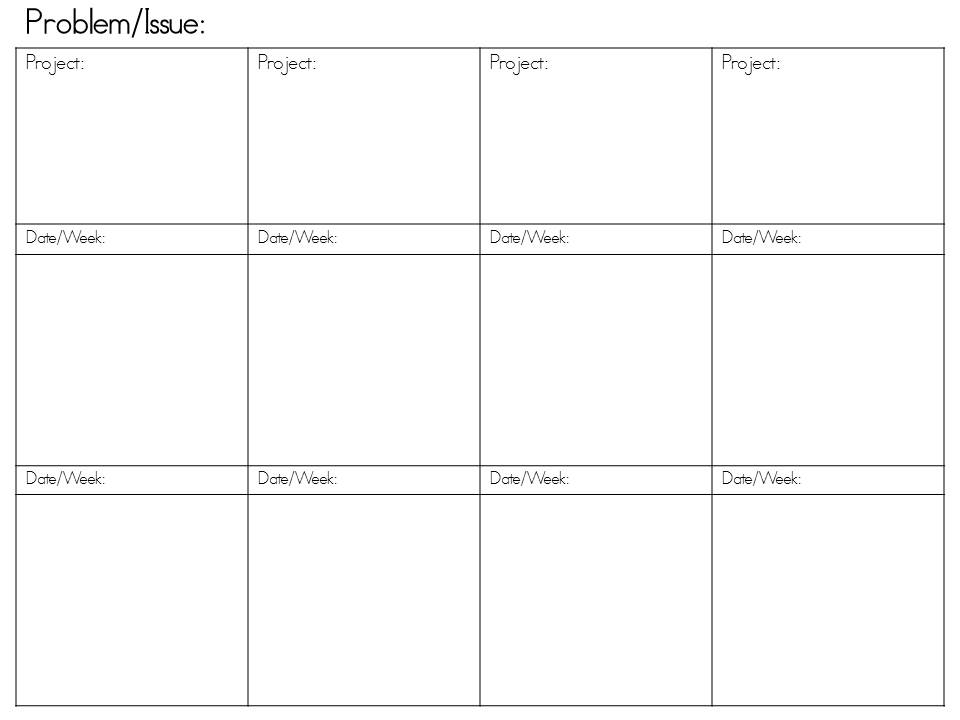
We make these 11 x 17 size and then post them up in the classroom and we also keep a copy in our lesson plan books. You can download the blank backmap for FREE here.
Here is an example of a completed backmap.

15 June 2013
STEM Challenge...Can you build the tallest tower?
This one is always a HUGE favorite among
the kids! It can be a little
tricky, so it is one of the challenges that we do later in the school year! The kids really need to work together as a
team in order to make this one work!
Here is the challenge...
What is the tallest
free-standing tower you can build using the materials provided within the time
limit?
Students get the following materials:
-One package of large marshmallows
-Three boxes of spaghetti noodles
-Ziploc bags (one baggie per pair or team)
-One yard of string or yarn
-One yard of clear tape
I love that these challenges are so
open-ended with so many possible ways to succeed! My kids came up with many different
solutions for this challenge! The tallest tower
we constructed was about 18 inches high. Setting a time limit for the challenge added another layer of
difficulty!
Try this one with your kids, with or
without the packet!
From time to time, these challenges will be
offered for FREE! Be sure to follow
my blog and my TPT store for notifications of these "flash freebies"!
12 June 2013
STEM Challenge...Can you make a straw rocket?
This one is so
easy to do and the kids absolutely go crazy for it! All you need are regular straws, smoothie straws cut in half (they
are wider) and tape.
Students can tape
the end of either straw and then use the other one to launch! It is fun to try both ways!
We developed a
bunch of fun challenges for the straw rockets as a class and then they competed
as table teams! By having the students extend the
challenge by developing their own tests and challenges for the straw rockets,
they were more invested and engaged in the process. They came up with some great ones!
Teams had to hit
a bullseye to score at least 10 points, shoot the rocket a distance of 12 feet
(multiple tries were added up), hit the ceiling with the rocket, and do three
tricks with the rocket.
I wonder what
challenges your students could come up with to use with the straw rockets?


Subscribe to:
Posts
(Atom)


STEM Breaks - A Quicker Way to STEM!
STEM Breaks are something I have been using in my own classroom for years! These short STEM activities give my students the opportunity to ...

Grab my button!

Popular Posts
-
 This is one of those classic science activities, that is always a HUGE hit with the students! Can you save FRED? This poor gummy worm...
 -
 Can you build a paper chair that can hold the weight of a stuffed animal? This STEM challenge is always one of my students' favorites! ...
 -
 I am so excited about our first school-wide monthly STEM challenge! This one requires very few materials! All you need is a pack of assort...
Ohio
